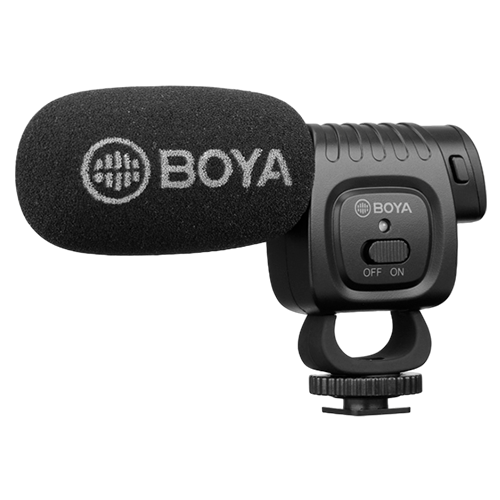
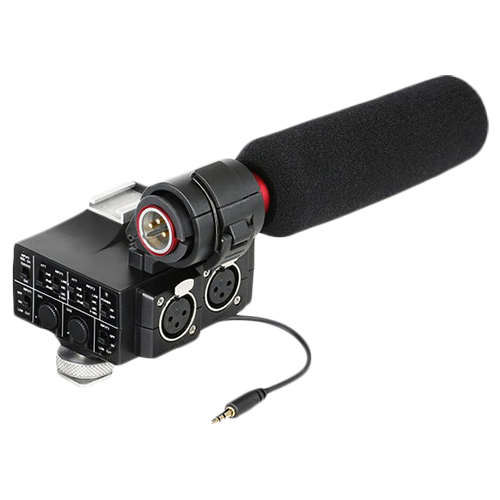
Why does a shotgun mic pick up street noise?
A shotgun microphone is highly directional, but it is not a laser beam. It picks up sound from a focused area in front while rejecting sound from the sides — but it cannot isolate one voice from all surrounding noise. If the street noise is loud enough, it enters the pickup pattern from all directions.
How shotgun directionality actually works
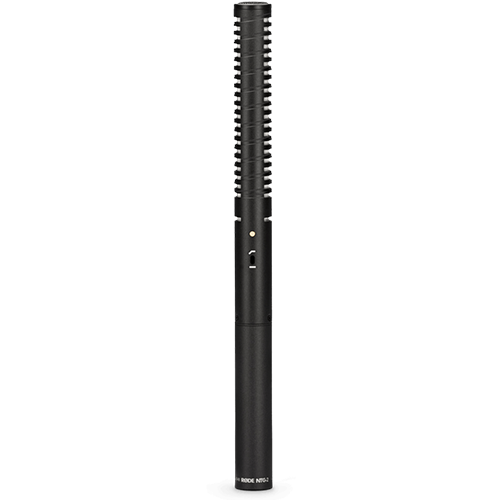
A shotgun mic uses an interference tube — the long barrel with slots along its length. Sound from the sides enters these slots at different times, causing phase cancellation that reduces their volume.
Sound from directly in front enters the tube aligned in phase and reaches the capsule at full strength.
But phase cancellation is not perfect. It reduces side sound by 10-20 dB, not infinity. A car horn at 90 dB from the side is reduced to 70-80 dB — still audible. A person speaking at 60 dB from the front is captured at full strength.
The voice is louder than the street noise, but the street noise is still present. The mic narrows the sound, it does not eliminate everything outside the beam.
Why distance makes it worse
The voice-to-noise ratio depends on how close the mic is to the speaker. At 30cm, the voice is much louder than ambient noise — the shotgun’s directionality makes the voice dominant.
At 2 meters, the voice is much quieter (inverse square law — doubling distance quarters the signal). Ambient noise stays the same. The voice-to-noise ratio collapses.
At 3+ meters, even a highly directional shotgun captures as much ambient noise as voice. This is why boom operators keep the mic as close to the subject as possible — just outside the frame.
Shotgun microphones at Camera Shop Egypt
How to get cleaner audio outdoors
Get the mic closer: A boom pole overhead, 30-50cm from the speaker’s mouth, dramatically improves voice-to-noise ratio. This is the film industry standard.
Use a lavalier instead: A lav mic clipped 15cm from the mouth captures voice at maximum strength with minimal ambient noise. Better than a shotgun at 2+ meters.
Use a furry windscreen: Wind noise is the worst outdoor audio problem. A dead cat windscreen eliminates it while preserving voice clarity.
Post-production noise reduction: Tools like Adobe Podcast Enhance and iZotope RX can separate voice from ambient noise — but prevention is always better.
The number one mistake with shotgun mics is mounting them on the camera 2-3 meters from the subject. At that distance, they are only slightly better than the camera’s built-in mic. A shotgun mic must be close — on a boom, just out of frame — to work as intended.
Gear that does this
Available in Egypt and suited to what this guide covers.