How to get sharp macro photos without a dedicated macro lens?
You do not need an expensive macro lens to photograph small subjects up close. Extension tubes, close-up filters, and lens reversing are affordable techniques that turn your existing lenses into capable close-up tools — each with different tradeoffs.
Extension tubes — the best budget option
What they are: Hollow tubes that fit between your camera body and lens, moving the lens further from the sensor. This reduces the minimum focus distance, letting you focus much closer.
Advantages: No glass elements — zero optical quality loss. Full autofocus and aperture control with electronic tubes. Work with any lens. Very affordable ($20-80).
Tradeoffs: You lose the ability to focus at infinity. Reduces the amount of light reaching the sensor (1-2 stops). Depth of field becomes extremely thin.
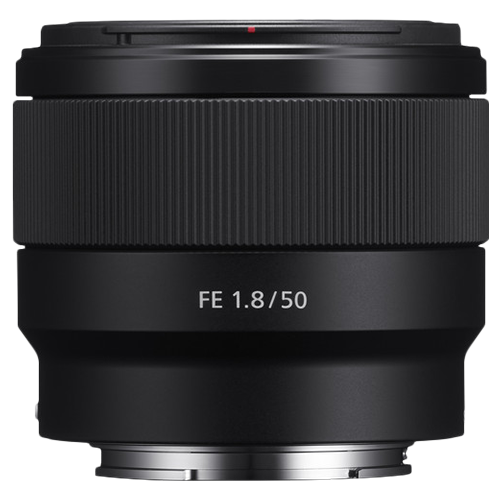
Best with: 50mm primes for general macro work. Use a 12mm tube for moderate close-up or stack a 12mm + 25mm tube for stronger magnification.
Other close-up methods
Close-up filters (diopters): Screw-on filters that act like a magnifying glass on the front of your lens. Easy to use but degrade sharpness, especially at the edges. Best option for a quick, ultralight solution.
Lens reversing ring: A cheap adapter that mounts your lens backwards on the camera body. Produces surprisingly high magnification and sharp results. Downside: fully manual — no autofocus, no electronic aperture control.
Cropping: If your camera has 40MP+, you can crop aggressively into a close-up subject and still have plenty of resolution. Not true macro but useful for casual close-ups.
Macro accessories at Camera Shop Egypt
Tips for sharper close-up results
Use a tripod. At macro distances, depth of field is millimeters thin. Even breathing can shift the focus plane. A tripod eliminates camera shake entirely.
Stop down to f/5.6-f/8. At macro distances, shooting wide open means only a sliver is in focus. Stopping down gives you usable depth of field.
Use manual focus with focus peaking. Autofocus hunts at very close distances. Switch to manual and use focus peaking for precise control.
Use focus stacking. Take multiple shots at slightly different focus distances, then merge them in Photoshop or Helicon Focus for front-to-back sharpness.
A set of electronic extension tubes (12mm + 25mm) costs a fraction of a macro lens and turns your existing 50mm prime into a surprisingly capable macro setup. It is the best entry point into macro photography.
Gear that does this
Available in Egypt and suited to what this guide covers.