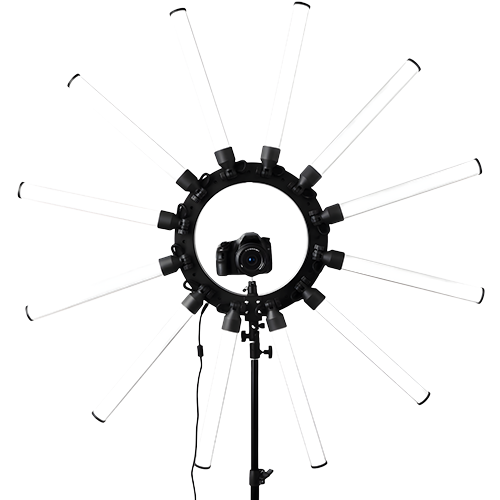
What is a key light, fill light, and back light?
These are the three fundamental lights in the classic three-point lighting setup — the foundation of professional photography and video lighting. The key light is the main source, the fill light softens shadows, and the back light separates the subject from the background.
The three lights explained
Key light: The primary, brightest light source. Placed to one side of the camera, usually at 30-45 degrees. It creates the main illumination and defines the shape and dimension of the subject through shadow.
Fill light: A softer, dimmer light placed on the opposite side from the key. Its job is to lighten the shadows created by the key light without eliminating them entirely. A fill set to half the brightness of the key is a common starting point.
Back light (also called rim light or hair light): Placed behind and above the subject, aimed at their head and shoulders. It creates a bright edge or rim around the subject, separating them from the background and adding depth.
Adjusting the ratio for different moods
High key (bright, minimal shadows): Strong fill light close to the key light’s brightness. Used for beauty, fashion, corporate headshots. Clean, friendly, approachable look.
Low key (dramatic, deep shadows): Weak or no fill light. Strong contrast between lit and shadow areas. Used for dramatic portraits, film noir, and moody content.
Natural ratio: Fill at 50% of key brightness. The most universally flattering ratio for interviews and general portraiture.
Lighting kits at Camera Shop Egypt
Do you always need three lights?
No. Many professionals work with just one or two lights plus reflectors and natural light.
One light + reflector: Use the LED as key light, bounce a reflector on the opposite side as fill. This is how many YouTube creators and portrait photographers work.
Two lights: Key + back light. Skip the fill and let the shadows go deeper for a cinematic look.
Start with one good light and learn to shape it before adding more. Mastering one light teaches you more about lighting than owning five lights you do not understand.
The three-point lighting setup has been the industry standard for nearly a century because it works. Learn it thoroughly, then break the rules intentionally. Every creative lighting setup is a variation of these three fundamentals.
Gear that does this
Available in Egypt and suited to what this guide covers.