


What is a crop sensor (APS-C)?
A crop sensor (APS-C) is a camera sensor that is smaller than a full frame sensor — typically around 22mm × 15mm on Canon bodies and 23.5mm × 15.6mm on Sony, Nikon, and Fujifilm bodies.
The name “crop” comes from the fact that it captures a cropped portion of what a full frame sensor would see using the same lens.
APS-C vs Full Frame — honest comparison
| POINT OF COMPARE | APS-C | Full-Frame |
| Sensor Size | ~22×15mm | ~36×24mm |
| Low-Light performance | Good | Better |
| Depth of field | Deeper (less blur) | Shallower (more blur) |
| Camera body size | smaller, lighter | Larger |
| Price | More affordable | Premium |
The Crop Factor
Because the sensor is smaller, it doesn’t capture the full image circle projected by the lens. This creates a magnification effect called the crop factor:
- Canon APS-C → crop factor 1.6x
- Sony / Nikon / Fujifilm APS-C → crop factor 1.5x
So a 50mm lens on a Canon APS-C body behaves like an 80mm lens in terms of field of view. A 18mm wide-angle behaves like a 29mm — still wide, but not as dramatic.
Which cameras at Camera Shop Egypt are (APS-C)?
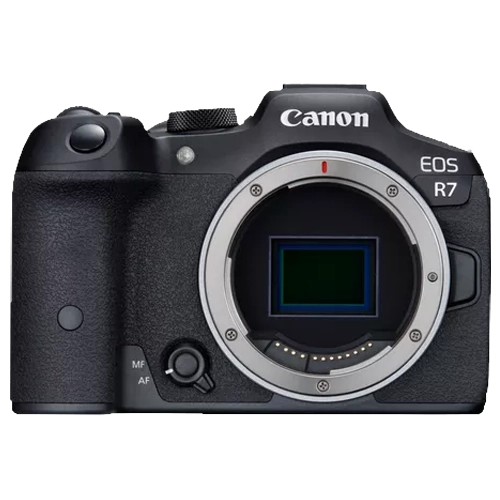
Canon EOS R7 Mirrorless Camera
In stock
Original price was: 68,250 EGP.65,000 EGPCurrent price is: 65,000 EGP.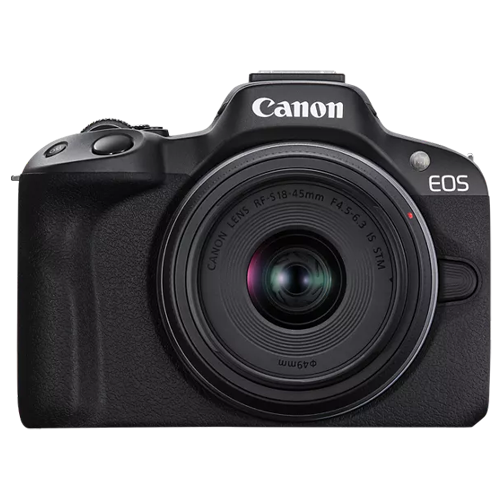
Canon EOS R50 Mirrorless Camera with 18-45mm Lens
In stock
Original price was: 42,000 EGP.39,000 EGPCurrent price is: 39,000 EGP.Where APS-C actually wins?
People talk about full frame like it’s always better — but APS-C has real advantages:
Price — you get a genuinely capable camera for much less money, leaving budget for better lenses.
Wildlife and sports photography — the 1.5x–1.6x crop gives you extra reach on a telephoto lens for free. A 200mm lens becomes a 320mm equivalent. That is a huge advantage.
Size and weight — APS-C cameras and their matched lenses are significantly smaller. For travel, street photography, and everyday shooting this matters enormously.
If your budget is under 40,000–50,000 EGP, an APS-C camera with a good lens will almost always give you better results than stretching to a budget full frame body with a kit lens. The sensor format matters far less than the glass in front of it and the light you put on your subject.