Should I use the built-in camera mic or an external one?
Built-in camera microphones capture audio from the camera’s position, not the subject’s position. Since the camera is typically 1-3 meters from the subject, the built-in mic picks up mostly room echo and ambient noise with the subject’s voice buried in the background. An external mic placed close to the subject is a dramatic improvement.
Why built-in mics sound bad
Distance from the subject: The most important factor in audio quality is proximity. A mic at 2 meters captures 4x more room noise than a mic at 1 meter (inverse square law).
Omnidirectional pickup: Most built-in mics pick up sound from all directions equally — subject, room echo, air conditioning, traffic, keyboard, everything.
No wind protection: Built-in mics have minimal windscreens. Even a slight breeze produces low-frequency rumble that overwhelms the voice.
Handling noise: Every button press, zoom ring turn, and autofocus motor sound is picked up by the built-in mic because it is physically attached to the camera body.
External mic options by budget
On-camera shotgun ($50-200): Mounts on the hot shoe, points at the subject. Better directionality than the built-in mic. Good for vlogging and casual content. Rode VideoMicro or VideoMic GO are popular budget options.
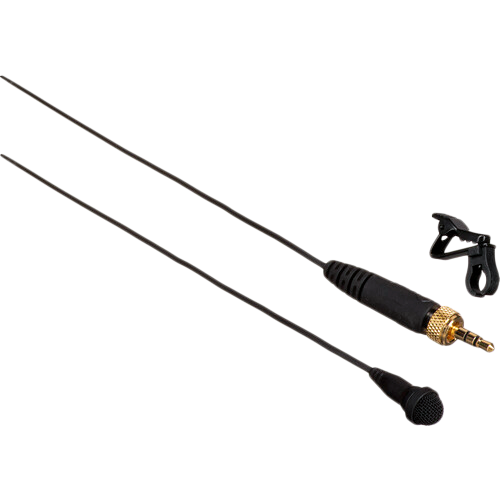
Wireless lavalier ($100-350): Clips to the subject, captures voice directly. The biggest audio quality leap for the money. DJI Mic 2, Hollyland Lark, Rode Wireless GO II.
Boom shotgun ($200-500): Professional shotgun on a boom pole above the subject. Film and broadcast standard. Rode NTG5, Sennheiser MKE 600.
USB desktop mic ($80-300): For podcasting, streaming, and desk content. Blue Yeti, Rode NT-USB Mini, Shure MV7.
External microphones at Camera Shop Egypt

RODE Wireless PRO 2-Person Clip-On Wireless Microphone
In stock
| System Configuration | 2-Person (2 Transmitters + 1 Dual-Channel Receiver) |
|---|---|
| Microphone Type | Built-in Omnidirectional + 2x Included Lavalier Mics |
| Internal Recording | 32-Bit Float, Up to 40 Hours per Transmitter (32GB Storage) |
| Wireless Range | Up to 853 ft (260 m) — RODE Series IV Technology |
| Battery Life | Up to 7 Hours (Transmitters & Receiver); Charging Case Recharges 2x |
| Encryption | 128-Bit |
| Connectivity | 3.5mm, USB-C, Lightning (cable set included) |
| Special Features | Intelligent GainAssist, Timecode Support, High-Pass Filter (75/100 Hz), Headphone Output |
| Compatibility | Camera, Smartphone, Computer; RODE Series IV Ecosystem |
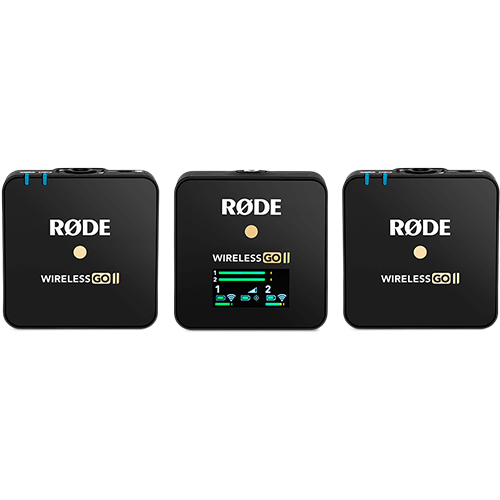
RODE Wireless GO II
In stock
| System Type | Dual-Channel 2.4 GHz Wireless |
|---|---|
| Transmission Technology | Series IV 2.4 GHz Digital |
| Range | Up to 656 ft (200 m) Line-of-Sight |
| Onboard Recording | Up to 7 Hours Uncompressed (24-bit / 48 kHz WAV) or 24 Hours Compressed per Transmitter |
| Audio Resolution | 24-bit / 48 kHz (Uncompressed); Export up to 32-bit Float / 48 kHz |
| Output Modes | Stereo or Dual-Mono |
| Latency | 3.5 – 4 ms |
| Output Connections | 3.5mm TRS Analog + USB Type-C Digital Audio Interface |
| Battery Life | 7-Hour Rechargeable + USB Power |
| App Compatibility | RØDE Central (Mac, Windows, iOS, Android) |
| connector | 1×1, 2×1 |

Hollyland LARK MAX 2 Ultimate Combo 2-Person Wireless Microphone System for Cameras and Mobile Devices (Space Gray, 2.4 GHz)
In stock
| System Configuration | 2-Person Wireless Microphone System |
|---|---|
| Wireless Frequency | 2.4 GHz |
| Audio Quality | 48 kHz / 32-Bit Float Recording |
| Max SPL | 128 dB SPL |
| Noise Cancellation | AI Deep-Learning, 5–25 dB Stepless Reduction |
| Battery Life | 11 Hours per Charge / 36 Hours with Charging Case |
| Receivers Included | Camera-Mount Receiver + USB-C Plug-In Receiver |
| Monitoring | 2.4 GHz OWS Wireless Monitor Earphones (Included) |
| Timecode | Built-In Timecode Generator on Each Transmitter |
| Microphone Pattern | Omnidirectional (Built-In + Lavalier Mics Included) |

Hollyland LARK M2S Ultimate Combo
In stock
| System Type | 2-Person Wireless Microphone System |
|---|---|
| Transmission Distance | Up to 1000 ft (approx. 300 m) |
| Frequency Band | 2.4 GHz |
| Audio Sampling | 24-bit, 48 kHz |
| Signal-to-Noise Ratio | 70 dB |
| Maximum SPL | 116 dB |
| Microphone Pattern | Omnidirectional (built-in transmitter mics) |
| Receivers Included | Camera-Mount Receiver, USB-C Plug-In Receiver, Lightning Plug-In Receiver |
| Battery Life | Up to 9 hrs (transmitters); 30 hrs total with charging case |
| Charging Case Battery | 1300 mAh, recharges full system multiple times |

Hollyland LARK M2 DUO 2-Person Wireless Combo Microphone System (2.4 GHz, Shine Charcoal)
In stock
| Wireless Frequency | 2.4 GHz |
|---|---|
| Audio Quality | 24-bit, 48 kHz Hi-Fi |
| Transmission Distance | Up to 1000 ft (approx. 305 m) |
| Microphone Type | Built-in Omnidirectional |
| Signal-to-Noise Ratio | 70 dB |
| Maximum SPL | 115 dB |
| Transmitter Battery Life | 10 hours (90 mAh each) |
| Charging Case Battery | 1950 mAh — up to 40 hours total system runtime |
| Receivers Included | 3 — Camera-mount (dual-channel), Lightning plug-in, USB-C plug-in |
| App Compatibility | iOS & Android via LarkSound App |

AirWave-K1
In stock
| الإرسال اللاسلكي | رقمي 2.4GHz |
|---|---|
| النمط الاتجاهي | متعدد الاتجاهات |
| نطاق التردد | 50Hz – 20kHz |
| الحساسية | -35dB ±2dB @ 1kHz |
| زمن الاستجابة الصوتي | أقل من 20ms |
| عمق البت / معدل أخذ العينات | 24-bit / 48kHz |
| نطاق التشغيل | حتى 100م (خط الرؤية المباشر) / 30م (بدون خط رؤية) |
| عمر البطارية (جهاز الإرسال) | 6 ساعات؛ علبة الشحن توفر شحنًا إضافيًا يعادل 1.5× ضعف الشحنة الكاملة |
| وزن جهاز الإرسال | 9 جرام (0.3oz) |
| نسبة الإشارة إلى الضوضاء | أكثر من 80dB |
When built-in mic is acceptable
B-roll and ambient sound: When you are capturing environmental audio (street sounds, nature, crowd noise) the built-in mic is fine because you want the ambient perspective.
Reference audio: Always record on the built-in mic as a backup reference track, even when using external audio. It helps with syncing and serves as an emergency backup.
Very casual content: Quick social media stories, behind-the-scenes clips, and personal records where audio quality is not critical.
For anything where voice clarity matters — tutorials, interviews, vlogs, courses, presentations — always use an external mic.
The single biggest upgrade to your video content is not a better camera or lens — it is an external microphone. A $100 wireless lavalier transforms amateur-sounding video into professional content. Audio quality matters more than video quality to viewers.
Gear that does this
Available in Egypt and suited to what this guide covers.