How to shoot sharp photos in low light without flash?
Shooting in low light without flash requires balancing three things: a wide aperture to let in maximum light, a shutter speed fast enough to avoid motion blur, and an ISO high enough to brighten the image without introducing too much noise.
Step-by-step approach
Step 1 — Open your aperture wide. Set your lens to its maximum aperture (f/1.4, f/1.8, or f/2.8). This is the most light you can gather optically without any quality penalty.
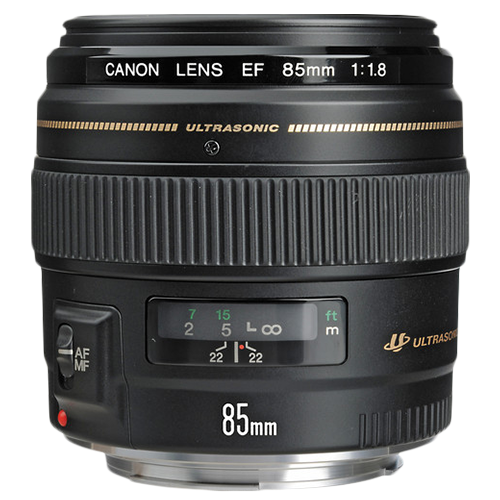
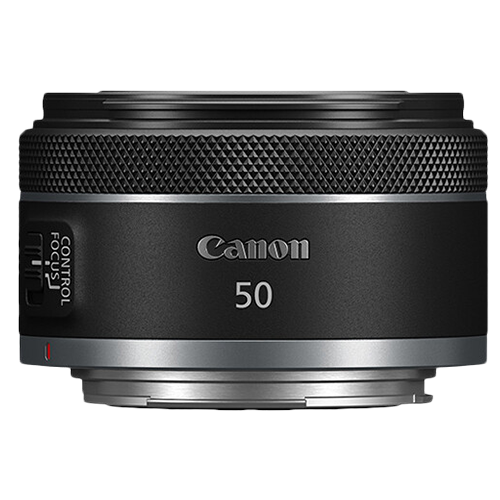
Step 2 — Set minimum shutter speed. For handheld shooting, your shutter speed should be at least 1/(focal length). For a 50mm lens, use 1/50s minimum. For an 85mm lens, use 1/100s minimum. With IBIS, you can go 2-3 stops slower.
Step 3 — Raise ISO as needed. After maximizing aperture and setting minimum shutter speed, raise ISO until the exposure looks correct. Modern cameras handle ISO 3200-6400 with very usable noise.
Step 4 — Use IBIS and OIS. If your camera has in-body stabilization, it lets you use slower shutter speeds (1/15s instead of 1/50s) for stationary subjects.
Common mistakes to avoid
Keeping ISO too low: A sharp photo at ISO 3200 is always better than a blurry photo at ISO 100 with too slow a shutter speed. Do not be afraid of ISO.
Forgetting continuous AF: In low light, use continuous autofocus (AF-C) so the camera keeps adjusting as you or your subject move slightly.
Not using a fast prime: If you regularly shoot in low light, a 50mm f/1.8 or 35mm f/1.4 makes an enormous difference compared to a kit zoom at f/4-5.6.
Great low-light cameras at Camera Shop Egypt
Additional techniques
Shoot RAW: RAW files handle noise reduction much better than JPEG in post-processing. Lightroom and DaVinci Resolve have excellent AI noise reduction.
Use a tripod for stationary subjects: A tripod eliminates camera shake entirely, letting you use base ISO and any shutter speed.
Lean against a wall or surface: If no tripod is available, brace yourself against something solid to reduce shake by 1-2 stops.
The biggest upgrade for low-light photography is not a new camera body — it is a fast prime lens. A 50mm f/1.8 on any camera body will outperform an expensive body with a slow kit zoom in darkness.
Gear that does this
Available in Egypt and suited to what this guide covers.